

KDP Keyword Research
Find search phrases that accurately describe the book, then check them before publishing.
AI ideas, public suggestions and clean formatting are not verified demand. Keep the manuscript evidence behind every claim.
KDP keyword research starts with the book and the next decision
Do you need candidate phrases, a cleaner shortlist, publishing-field guidance or a visibility diagnosis? Choose the task first. More generated wording will not fix a misleading promise or an unavailable edition.
Keep four outputs: a book brief, a candidate notebook, an editorial shortlist and a dated publishing record. A short justified list is more useful than many unexplained phrases.
Choose the route that matches your starting point
| Your situation | Next action | Detailed guide |
|---|---|---|
| You have a manuscript but no candidates | Translate content and reader tasks into a bounded research brief. | How to find KDP keywords |
| You want to research manually | Record public language and judge manuscript fit in separate passes. | Research without tools |
| You want additional wording ideas | Generate possibilities, then check each inferred claim against the book. | AI keyword review |
| You already have a messy collection | Preserve the raw list, merge true duplicates and keep meaningful distinctions. | Keyword cleanup workflow |
| You are ready to enter metadata | Review current restrictions, existing fields and final wording. | Keyword rules and field guide |
| Your book is hard to find | Separate availability, query position, presentation and sales before editing. | Mistake diagnosis and discoverability hub |
An AI response belongs in the candidate notebook, not directly in the publishing record. The generator proposes ideas; it does not inspect the full manuscript or verify search volume. Keyword Cleaner is a manual workflow guide, not an automatic paste-and-clean utility.
Write a brief before collecting phrases
- Content: subject or story, reader, format and defining features, with manuscript references.
- Exclusions: what the book does not provide, even if a popular phrase suggests it.
- Edition: language, marketplace and current title, description and keyword fields.
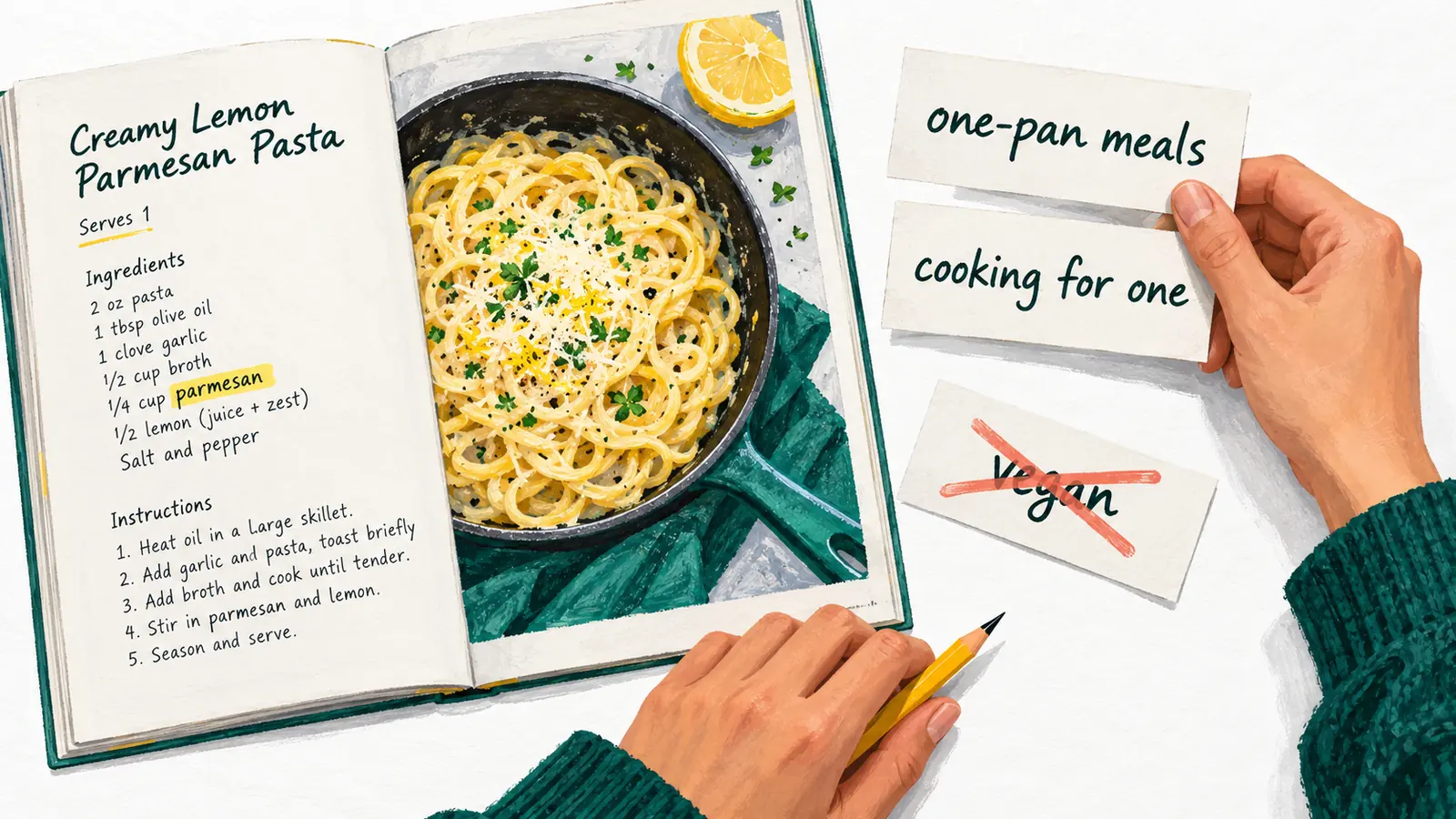
Fictional example: a one-person recipe collection may support "cooking for one." If its recipes contain parmesan, a whole-book "vegan" claim is not accurate. Check the collection, not just one attractive sample.
Compare every candidate with the brief. Do not expand the book's promise merely because a tool generated a plausible phrase.
Keep ideas, observations and facts separate
Record each phrase's origin, date and context. A public suggestion is not verified search volume. A comparable listing does not expose the publisher's backend entries. An AI explanation is another generated statement, not independent validation.
Use KDP's keyword guidance for field expectations and prohibited wording, and the worked examples for keep, investigate and reject decisions. Advertising targets and shopper search terms need their own context; use Ads Keyword Strategy rather than copying an export into metadata.
Apply the evidence test your genre needs
- Cookbooks: yields, equipment, ingredients and tested preparation claims.
- Puzzle books: rules, validated answers, difficulty and print legibility.
- Romance: the sustained relationship arc, tone and audience, not an isolated scene.
- Self-help: instruction and exercises, not guaranteed transformation.
An audience, difficulty or benefit label can require different evidence in another genre. Do not reuse it without checking the actual manuscript.
Prepare an inspectable publishing handoff
| Record | Minimum contents | Decision it supports |
|---|---|---|
| Book brief | Content, audience, format, exclusions and manuscript references. | Does the phrase describe this book? |
| Candidate notebook | Original wording, origin, date, context and unanswered questions. | What was observed, and what remains uncertain? |
| Editorial shortlist | Keep, investigate or reject with a reason and evidence location. | Which directions deserve final wording review? |
| Publishing record | Edition, previous and proposed fields, submission date and overlapping changes. | What changed, and what can later observations establish? |
Compare the shortlist with the title, description and sample. Use the metadata guidelines and description guidance for those fields. Do not ask keywords to compensate for a contradictory cover or blurb.
- Preserve raw wording and its origins before cleanup.
- Keep rejected phrases and reasons outside the export.
- Mark unavailable demand evidence as unavailable.
- Review final entries separately from brainstorming.
Confirm updates before interpreting outcomes
Record submission and visible confirmation separately. Use operation-specific timelines; there is no universal waiting period. Search results are dynamic, not a fixed global ranking.
Log overlapping cover, price, advertising and promotion changes. Their combined intervention does not isolate a keyword's effect. A small observation set may justify a recheck rather than a sales conclusion.
Choose one next action
For a new manuscript, start with candidate research. For an existing list, use manual cleanup. For more possibilities, use AI-assisted brainstorming with human review. For broader positioning, use the publishing keyword strategy.
If the concept itself is unclear, return to Niche Research. If a published edition appears broken, use KDP Problems before generating more phrases.
Sources and scope
Official KDP references checked: 15 October 2026. These are editorial workflows, not an approved ranking formula. No live demand, competitor backend fields or account performance was audited.
Frequently asked questions
Where should I start with KDP keyword research?
Identify the unresolved decision first. A new manuscript needs a content brief and candidate research; a messy existing list needs cleanup; a visibility problem needs diagnosis rather than more generation.
What should a research session produce?
A book brief, a candidate notebook, an editorial shortlist and a dated publishing record. Retain the evidence and unresolved questions, not just the final wording.
Can I research keywords without a paid tool?
Yes. A bounded manual session can collect public language and inspect content fit. It does not establish verified search volume or a guaranteed search position.
Are AI suggestions verified Amazon searches?
No. They are generated possibilities. Check manuscript fit, actual public language and current publishing rules independently.
Should I use the same tests for every genre?
No. Recipe yields, puzzle validation, romance relationship dynamics and self-help exercises support different promises. Use the relevant genre guide.
Does a keyword edit prove why sales changed?
No. Confirm the edition and visible update, record overlapping changes and distinguish availability, query observations and sales. A combined intervention does not isolate one phrase's effect.