

AI Book Description Generator
Draft a clear book description from the actual contents, then review every promise before it reaches your listing.
Choose a writing approach, not a conversion guarantee. The model cannot verify your manuscript or publish changes.
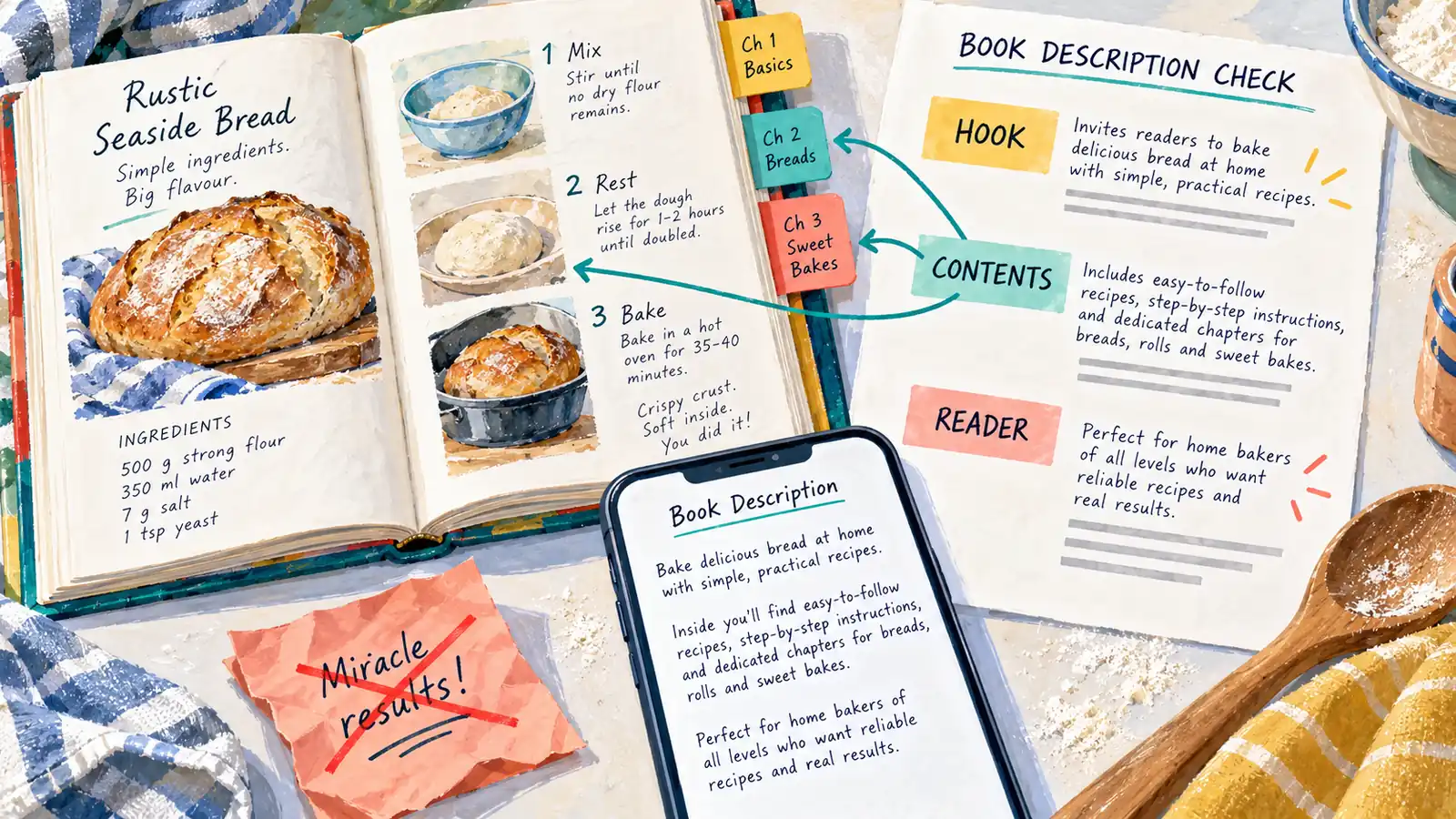
A title is not a synopsis
Enter the full book title, then add contents, intended reader and exclusions in the optional context field. A title alone may suggest several different books. The model cannot inspect your manuscript or establish which of its guesses are true.
For nonfiction, name actual topics, exercises or examples. For fiction, supply the protagonist, conflict, stakes and tone without asking for spoilers. For a puzzle book, specify the real activity types and answer arrangement rather than an untested health benefit.
Fictional context: A practical home bread book with recipes for basic loaves, rolls and sweet bakes. Step-by-step instructions and ingredient lists are included. No gluten-free section, nutrition programme, professional certification or guaranteed results.
Choose one of seven marketing approaches, one to three variants and an approximate word target. A narrative approach does not authorise an invented life story, and an authority approach does not establish credentials. The tool requests restraint but cannot guarantee compliance.
Keep a claim only when the book supports it
| Draft wording | Decision | Reason |
|---|---|---|
| Step-by-step recipes for loaves, rolls and sweet bakes | Keep after a manuscript check | Specific scope supplied in the brief |
| Perfect bread every time | Remove | An absolute result the book cannot establish |
| A complete gluten-free programme | Remove | The brief explicitly excludes that content |
| Written by an award-winning master baker | Remove unless independently verified | A fluent description is not proof of an award or qualification |
Keep the opening focused on what the reader can expect. Short paragraphs and concrete content are easier to review than a wall of benefit claims. A closing line can invite the reader into the book without urgency, discounts or guaranteed transformation.
The description audit example shows a fuller editing pass. If a statement cannot be traced to the book or independently checked, mark it for investigation or remove it.
Review the destination, not just the draft
- Edit for accuracy and voice. Check every feature, audience promise and factual statement. Remove invented testimonials, endorsements and unsupported author history.
- Check length and formatting. KDP's description guidance sets a 4000-character limit, including HTML markup. This tool returns plain text; a word target is not a platform limit, and adding formatting can change the count.
- Remove restricted material. The same official guidance excludes content such as contact details, website links, review requests, testimonials and price information from the description. Check the full current restrictions before submitting.
- Preview the listing. Paste the reviewed text into the appropriate KDP field yourself and check the final formatting. This generator neither publishes changes nor checks the live detail page.
- Save a baseline. Record the old copy, edition and change date. Note overlapping cover, price or advertising changes. A later sales movement cannot by itself establish that the description caused it.
Use individual copy buttons for editing and raw or JSON copies for your review record. A malformed response is shown as text rather than executed as HTML. Requests can fail or be rate-limited; do not include passwords, reader data or confidential material in the external-provider request.
Check consistency with the title generator, keep keyword research candidates separate from description prose, and investigate categories independently. The directories are AI Tools for KDP and KDP Tools.
Official description guidance checked on 16 October 2026. Examples and illustration are conceptual; no conversion uplift is claimed.
Frequently asked questions
Is a title enough to generate an accurate description?
Not reliably. Add actual contents, intended reader and exclusions in the optional context field. The model cannot inspect the manuscript or verify facts independently.
Which settings are available?
Choose one of seven marketing approaches, one to three variants and a target of 120, 180, 250, 350 or 500 words. A pen name is optional. Word targets are requests, not guaranteed output lengths.
Can an authority or narrative approach invent a personal story?
It should not, and the request explicitly forbids that. You must still remove any invented credentials, biography, testimonials or unsupported claims from the returned draft.
Is the word target the KDP description limit?
No. KDP uses a 4000-character limit including HTML markup. This tool returns plain text and flags overlong drafts; verify the final formatted text in KDP before submitting.
Does the tool publish or test the description?
No. It generates drafts through an external model provider. You edit, check and publish the final version yourself; no conversion improvement or approval is guaranteed.