

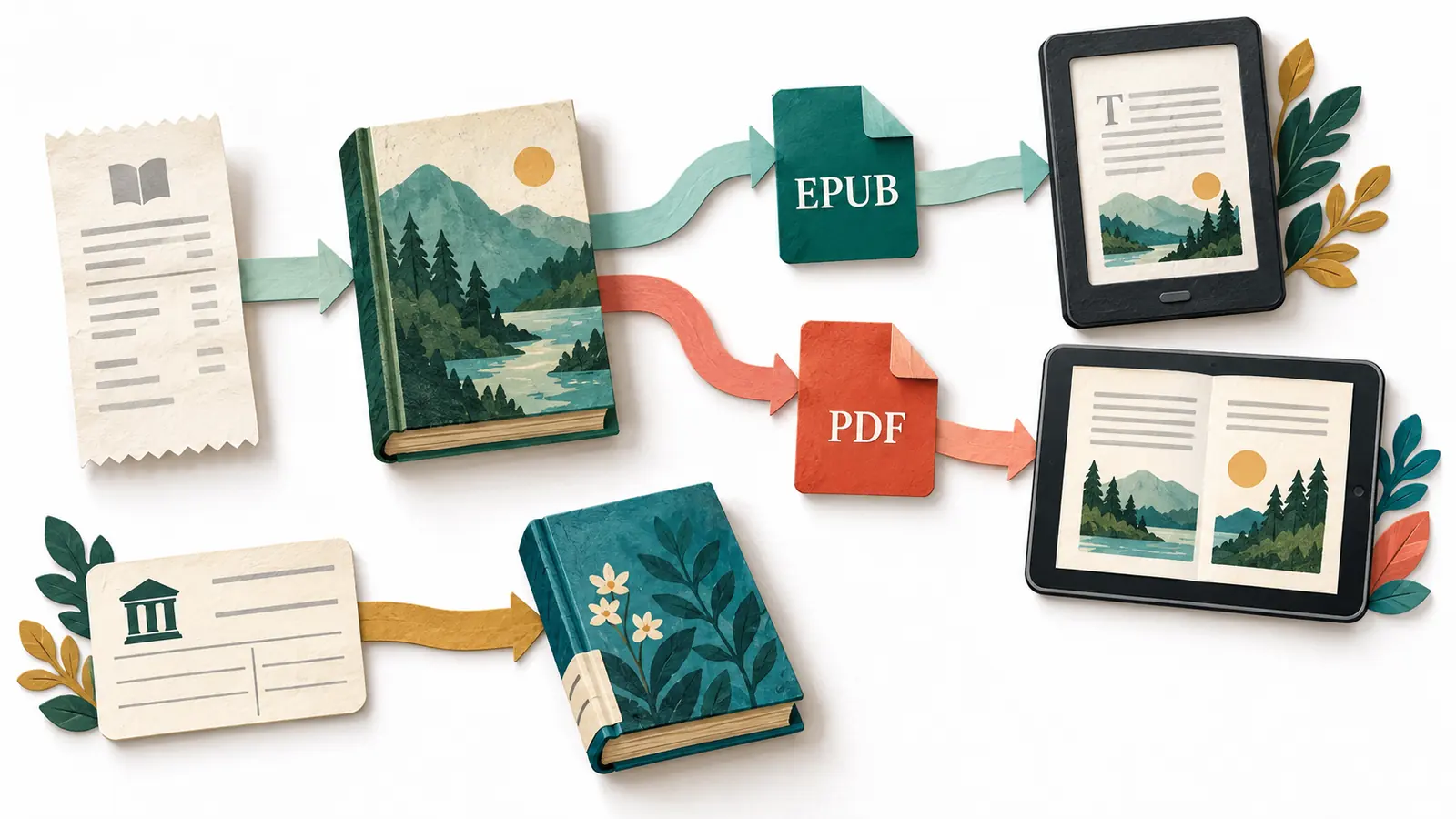
News analysis. Change effective January 20, 2026; reviewed October 19, 2026. A file-access decision inside KDP now has a more visible consequence for readers who purchase an eligible ebook. Amazon's DRM-free download change makes EPUB and PDF access part of the publishing conversation. It does not turn every Kindle title into an unrestricted file, and it does not give borrowed books the same download route as purchased copies.
What changed for purchased ebooks
According to KDP's DRM guidance, from January 20, 2026 verified purchasers can download EPUB and PDF files for books whose publishers have confirmed the DRM-free option. The access route is Manage Your Content and Devices. Previously published DRM-free titles are not all automatically included: books published before December 9, 2025 need the relevant confirmation.
The guidance distinguishes purchases from borrowing. Kindle Unlimited and other borrowers do not receive EPUB/PDF downloads through this purchase-based feature. It also explains that changing the DRM setting does not change the royalty structure, and that files already downloaded remain with readers even if a publisher later changes the setting. Check the live help page before changing a title.
Separate file access, rights and distribution
Publishers should ask three different questions. What can the purchaser download? What rights does the publisher hold in the material? Where has the publisher agreed to distribute the digital edition? Answering the first question does not settle the other two.
A book might contain licensed illustrations, a contributor's essay or a font with particular embedding terms. A DRM choice does not expand those permissions. Review the underlying agreements when the delivery model changes, especially if an old arrangement was negotiated for a narrower use. This is a rights check, not an assumption that all third-party material prevents DRM-free publication.
Distribution commitments are separate again. KDP Select enrolment guidance describes a digital exclusivity programme. A purchaser's ability to download a file should not be read as permission for the author to ignore an applicable exclusivity commitment. Review the terms of the actual enrolment before placing the same digital edition elsewhere.
Audit the catalogue title by title
Start with a small inventory rather than a bulk assumption. Record the title, edition, current DRM choice, publication period and decision owner. Identify whether the publisher has made the new confirmation. An old note saying “DRM off” is not sufficient evidence that the current purchaser-download option is enabled.
Use the inventory to find exceptions. A revised cookbook may have different image permissions from its first edition. A translated title may involve a separate contract. A co-authored manual may need agreement between contributors. Resolving these cases individually is more reliable than applying a commercial slogan to every file.
The purpose of this exercise is not to make one DRM decision mandatory for all authors. It is to make the decision explicit and reproducible. Record why a title is included or excluded, who approved the choice and when it should be reviewed. That record will be useful when a reader asks about a different edition months later.
Treat file availability as a production responsibility
A download option is only useful if the book remains readable. A text-heavy novel, an illustrated recipe collection and a workbook have different risks. Test the actual structure: headings, navigation, image captions, footnotes, tables and any material that depends on a fixed arrangement.
Kindle Previewer provides ways to inspect a book across reading conditions such as device views, orientation and font sizes. That is useful preparation, but it is not a guarantee about every third-party application. Keep the difference between a checked preview and a universal compatibility claim visible in your production notes.
Consider a fictional cooking title with a two-column ingredient list. The original layout might look good at one size while becoming confusing when text reflows. A reader should not have to guess which quantity belongs to which ingredient. Checking that relationship is more important than merely confirming that a file opens.
Use a repeatable sample set: the contents page, one ordinary chapter, the most complex illustration, a table and the end matter. A short, consistent test catches regressions more effectively than browsing random pages each time. If the manuscript changes, repeat the relevant checks instead of relying on an earlier edition's result.
Write access instructions that do not overpromise
Reader-facing instructions should identify the eligible purchase and the Amazon account route. Avoid saying that every Kindle reader can obtain every format, or that a subscription borrow is equivalent to a purchase. Do not promise that a retailer's menus look identical on every device.
A useful support response begins with the edition, marketplace and purchase status. Ask what the reader can see without requesting credentials, payment details or a complete private account screenshot. If a screenshot is necessary, ask the reader to hide personal information. The aim is to identify the access path, not to take over the account.
Changes can also produce a timing mismatch between the publisher's saved choice and what a reader sees. Record when the choice was changed and consult the current KDP guidance before promising an immediate result. A temporary mismatch should not automatically be described as lost ownership or a broken manuscript.
ARC copies and retailer downloads are different products of different workflows
An advance reading copy supplied through an author programme is not the same thing as a purchased Amazon ebook. Its delivery conditions come from that programme and the publisher's rights. The new Amazon download option does not establish which manuscript is available in a separate ARC listing.
On Virtalibry, inspect the title's actual access information in the ARC Book Library. A saved Amazon price, a manuscript's availability and membership-related capabilities are separate facts. None should be used as a substitute for the others when explaining how a reader gets a copy.
This distinction also prevents a review-related misunderstanding. Receiving an EPUB does not establish a particular Amazon review label or guarantee that a review will be accepted. A file-delivery event and a retailer's review decision belong in different records.
A practical decision for the next edition
For the next catalogue review, choose one representative title. Confirm rights and distribution commitments, inspect the current DRM setting, test its reading structure and write a short access explanation. Then decide whether the same reasoning applies to the rest of the catalogue. Do not assume that one successful download settles every edition.
The 2026 change expands an eligible purchaser's options; it does not remove the publisher's responsibility for clear files and accurate promises. Keep revenue questions in the royalties guide, access questions in the title's delivery instructions and exclusivity questions in the applicable terms. Separating those decisions makes the change easier to use responsibly.
Sources and scope: KDP's DRM, Select and Previewer documentation supplies the product facts. The catalogue audit and cookbook example are original editorial analysis. This article does not offer legal advice or claim to test every reading device.