

How to Rank for Amazon Book Keywords
Choose one search the manuscript genuinely serves. Check availability and the reader promise before editing.
Correct a specific mismatch, confirm the live change and review comparable evidence alongside costs.
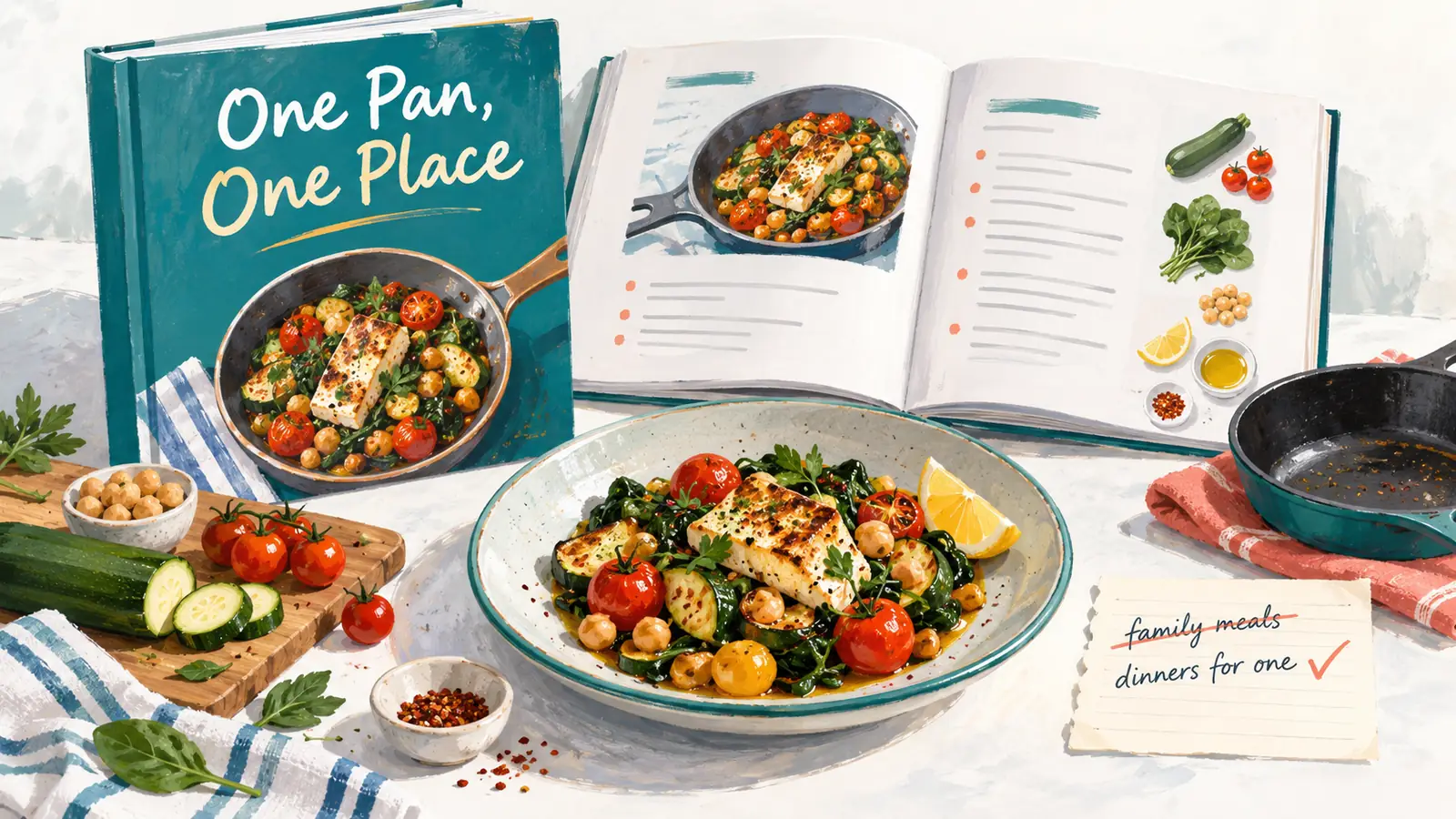
Choose a reader-fit goal before chasing a position
To improve a book's chances of appearing for useful Amazon keywords, begin with a query the manuscript genuinely serves. Verify availability, diagnose the mismatch and make a justified correction. You cannot guarantee a particular position; KDP's search guidance makes that limitation explicit.
Make the intended edition understandable for a defined reader, then observe a fixed query set. First page for every cooking term is not a controllable publishing task.
Original working offer
One Pan, One Place is an invented cookbook of vegetable dinners portioned for one adult. It explains small-batch ingredient use and ordinary preparation steps. It does not provide family meal plans, therapeutic diets or vegetable-growing instruction.
Vegetable dinners for one fits this brief; feeding a large family does not. These are relevance judgments, not measured demand or keywords to paste into another book.
Distinguish unavailability from weak or unobserved placement
Open the intended edition directly in the relevant marketplace. Confirm format, language, purchase path and any recent processing state. KDP's find-your-book checks help distinguish search observations from publishing problems.
| Observation | First investigation | Avoid |
|---|---|---|
| The direct edition is unavailable | Publication state, format and market | Buying traffic to a broken offer |
| Exact-title lookup works, topic query does not show the book | Query scope, reader fit and inspected range | Calling a working edition banned from one query |
| The topic query implies a different reading task | Whether the manuscript can support it | Adding misleading keywords to force a match |
| The book appears, but the offer is confusing | Cover, description and available sample | Assuming repetition alone fixes the problem |
Name the failure narrowly
Write "not observed within the inspected range" when that is all you know. Do not assign the next numerical position or infer zero demand. Use the search-position explanation for those measurement boundaries before deciding which control to change.
Audit the expected book, not just the words in the phrase
Inspect what a suitable reader appears to seek: genre, audience, portion size, format, level or a particular practical constraint. Compare the kinds of books returned for the query, recording store, department and date. Read descriptions and samples where useful. Do not select one favorable cover and ignore a result set dominated by a different task.
A result set dominated by large-family batch cooking contradicts the fictional cookbook's promise, despite shared ingredients. Mixed results justify uncertainty or a narrower query, not a forced match.
Keep the evidence against your favorite phrase
Record why a phrase implies missing content, or what still needs inspection. Suggestions, result counts and tool estimates are not verified buyer counts.
The keyword strategy guide covers candidate selection and field allocation. This workflow begins after a candidate exists and asks what specific obstacle you can responsibly address.
Correct one supported mismatch
Choose an intervention from the diagnosis. Repair inaccurate metadata or the wrong edition path promptly. For a discretionary test, change a specific element such as an unclear description rather than replacing title, cover, keywords and price together. Save the previous version and rationale.
Follow KDP's metadata rules and keyword guidance. Use the real title and accurate reader language. Do not add unrelated authors, unauthorized brands or unsupported claims. A field is not a place to purchase relevance by repeating the target phrase.
Original description correction
Unclear: A collection of delicious vegetable recipes for every occasion and every household.
Clearer, if accurate: Prepare vegetable dinners for one without planning a week's meals for a family. This cookbook focuses on single-serving portions, small-batch ingredient use and straightforward preparation steps.
This correction applies only to that manuscript. Keep reviews, testimonials, review requests, external contact links, pricing and keyword-tag blocks out of the description under KDP's description restrictions.
The correction makes the promise more precise. It does not prove that Amazon will raise the book's position or that observed purchase conversion will improve. Evaluate those questions separately.
Inspect the exact edition journey before seeking more exposure
Open the corrected live page on desktop and mobile. Check that the cover, title, format and description agree. Inspect the sample where available for the actual format and device. A cookbook promising single servings should let a reader assess how clearly those portions and steps are presented.
Fix unreadable interior images and confusing purchase paths as reader-experience defects, not as proven numerical ranking penalties.
- Verify the intended market and edition.
- Check that the live change is actually present where applicable.
- Read the cover and description at a normal mobile size.
- Inspect a representative sample if available.
- Document unresolved access or formatting problems.
Submission and confirmation are separate events
Use KDP's operation-specific timelines rather than expecting every edit to appear immediately. Record submission and later confirmation. Backend keyword values need not be visibly displayed on the detail page, so do not invent a visible-field test that the storefront cannot provide.
Introduce the actual book to genuinely interested readers
Once the offer is coherent, choose one appropriate route: an owned newsletter, a permitted community post, a suitable placement or a bounded advertising test. Define its audience, cost or time allowance and the next outcome you can assess. Do not present a promotion as a contracted organic rank increase.
For the invented cookbook, a useful introduction might show a representative single-serving recipe format to readers interested in cooking for themselves. It should communicate what the book provides without therapeutic claims, fake urgency or a promise that every reader will enjoy it.
Do not script searches and purchases as a ranking service
Do not coordinate target searches, clicks and transactions to imitate demand. Do not buy reviews. Free or discounted copies must be offered without requiring or influencing a review; see KDP's customer-review policy. Use the email guide for willing subscribers and the Ads guide map for a separately scoped paid test.
Log overlapping promotions. They can introduce real readers while preventing a clean before-and-after keyword comparison.
Review the same query protocol after the relevant change
Choose a modest query set in advance, with fixed store, department, filters, edition and counting method. Keep title lookups separate. Record sponsored results separately and define the inspected range. Missing observations remain missing rather than being replaced by zero.
| Record | Example for the fictional cookbook | Boundary |
|---|---|---|
| Hypothesis | The description obscures the single-serving promise | A reader-fit hypothesis, not a private algorithm claim |
| Change | Clarify portion scope; keep other fields stable | Record unavoidable simultaneous edits |
| Live check | Correct description observed on the intended edition | Operational confirmation, not proof of performance |
| Review | Repeat the predefined query checks and inspect actual outcomes | No universal interval or guaranteed position |
Use the measurement worksheet to separate observed positions from reported orders and unknown organic attribution. A position improving from 9 to 6 does not quantify new readers, and a simultaneous newsletter can explain some of the order change. Keep counts and limitations visible.
Keep the clearer offer, revise the hypothesis or stop
Keep a truthful improvement even when a short performance comparison is inconclusive. Reconsider a target query when contrary evidence shows the book does not serve it. Stop an introduction route whose cost exceeds its affordable allowance. Do not rewrite accurate metadata merely to satisfy a ranking deadline someone sold you.
Escalate the right kind of problem
A reproducible availability or publishing discrepancy can justify a support case with edition, market, dates and relevant evidence. A request to guarantee first-page placement cannot. If the real goal is a category list, use the category promotion workflow; if the offer or audience remains unclear, return to the broader discovery plan.
Explore the KDP discoverability guides to connect this question with keywords, categories and ranking evidence.
Sources and scope
Official KDP sources checked: 16 October 2026. Book, copy and review examples are fictional. No live keyword-volume or account audit was performed. This workflow offers reviewable corrections, not guaranteed organic positions or a click-to-rank formula.
Frequently asked questions
How do I start improving a book's Amazon keyword position?
Choose one query whose reader intent matches the manuscript. Check that the correct edition is available, inspect the query's results, and identify one concrete mismatch before editing metadata.
Should I add a popular phrase even if the book barely covers it?
No. Keywords and the listing should accurately represent the book. A phrase attracting the wrong readers can create an expectation the manuscript does not fulfill.
What if my book appears by title but not for a topic query?
That shows a different situation from an unavailable edition. Record the topic search context and result range, then assess reader fit and positioning. Do not claim an exact position outside the range checked.
Should I put a block of keywords in the book description?
No. Use a readable description that accurately explains the book's audience and contents. KDP's description rules prohibit keyword or book-tag phrases; backend keyword fields serve a different purpose.
Can I ask a group to search, click, and buy to boost ranking?
Do not organize scripted search-and-purchase activity to manipulate placement. Introduce the book to genuinely interested readers and let them decide independently whether to buy, read, or review it.
How do I know whether an improvement was worthwhile?
Verify the operational change, record comparable query observations, and review actual orders, retained earnings, and promotion costs. A higher observed position alone does not quantify new readers or profit.